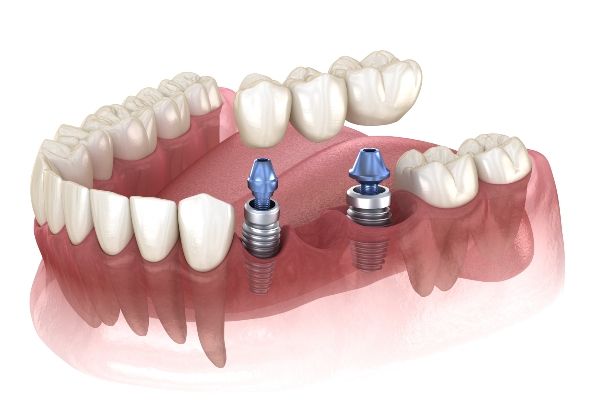
Patients choose implants over their alternatives for greater comfort, convenience, and durability. There is no set time to get implants; rather, there are common dental conditions and lifestyle factors that steer a patient toward this long-lasting dental restoration. Below are the most common reasons why patients decide to get dental implants.
Most patients get implants when they are missing teeth. Although dentures are the traditional solution to missing teeth, dental implants are a more natural-looking and functional solution. Implants can replace a full set of missing teeth. However, if just one tooth is missing, a single implant may replace it.
Sometimes, dental professionals cannot save a patient's broken tooth. However, if the patient has severely chipped, cracked, or otherwise broken teeth, it may be time to get dental implants. The dentist can remove and replace broken teeth with implants, restoring the patient's smile. This treatment method has both aesthetic and functional benefits; the patient can use their teeth easily and confidently.
Infected teeth are often salvageable. Sometimes, however, it is necessary to extract an infected tooth. Then, a functional implant can replace the lost tooth, giving the patient a pain-free and restored smile.
Patients who have tried but did not like dentures may qualify for dental implants. Dentures can be loose, fit poorly, and leave the jawbone unstimulated, causing a sunken-in facial appearance. In contrast, implants keep the jawbone engaged as they act like natural teeth. This can prevent and even fix any facial collapse.
Finally, patients get dental implants when they want a permanent tooth replacement treatment that does not require major lifestyle changes. For example, there is no need to take implants out at night or use dental adhesive to keep them in place. Rather, caring for implants is the same as caring for natural teeth — regular brushing, flossing, and dental visits constitute proper care.
The dentist will examine the overall health of the oral cavity before the procedure. This is partly to ensure that the conditions are right for osseointegration, the process in which implants fuse with the jawbone. Without proper osseointegration, the implants will not be able to work as natural teeth and will likely fail.
Some patients may benefit more from an alternative if they have significant bone loss, diabetes, or rheumatoid arthritis. These conditions can get in the way of proper healing, again causing implant failure. However, some patients may still be eligible; for example, a bone graft may help a patient recover lost bone mass to prepare the mouth for implants.
Check out what others are saying about our dental services on Yelp: Dental Implants in Denver, CO
Looking for a way to replace teeth without dentures? Dental implants may be the answer. Call our office for more information on implants.
Request an appointment or call Integrity Family Dental at 303-337-3000 for an appointment in our Denver office.
An implant dentist often provides crucial support when a dental implant sustains damage that could…
Proper care is essential to maintain oral health, whether a tooth is treated with a…
A healthy and complete smile contributes to confidence, oral function, and overall well-being. When missing…
With routine checkups and professional polishing, a dental crown can stay smooth, comfortable, and bright…
An implant dentist provides a reliable and long-lasting solution for missing teeth through dental implants.…
Finding the right implant dentist is the first step for those considering dental implants to…