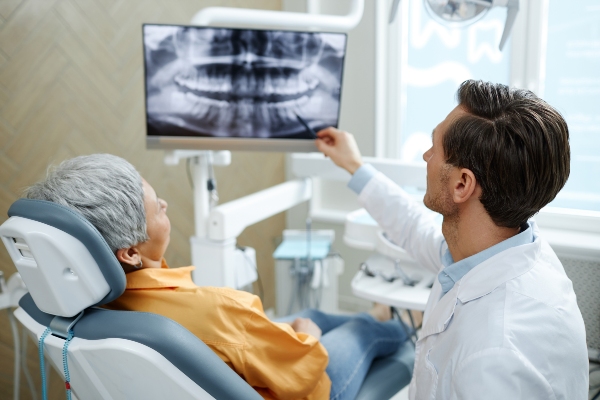
Before one can receive dental implants, the dentist must first determine if they are eligible. The dentist will order X-rays to assess the amount of healthy underlying jawbone and gum tissue. They will perform a physical examination to ensure no abnormalities or infections need addressing, such as gum disease, cysts, or lesions.
While they will be able to tell by the state of the gums and teeth, the dentist will inquire about smoking and tobacco use— both are prohibited throughout and beyond treatment to prevent a host of issues. The dentist will also review the candidate's medical history to ensure they are free of autoimmune disorders or other conditions inhibiting healing, such as certain cancers or HIV.
Finally, they will ensure the patient did not lose teeth or have a poor record of oral hygiene. This is often an indicator that patients will not follow instructions throughout the process and may be more prone to infections and dental implant failure. However, once approved, they will provide a tentative appointment schedule spanning approximately nine months.
The dental implant process includes two surgical appointments, multiple checkups, and attaching the chosen restorative. The first appointment involves placing the dental implant post into the jawbone. The dentist will use an anesthetic so the patient feels no discomfort during the procedure. They will then create an incision in the gum line and create a hole in the jawbone before inserting the post at an angle. The dentist will then suture the area so the patient can begin the three-month or longer healing process, known as osseointegration.
The next surgical appointment is to place the abutment. The abutment is the anchor for the restorative placed during the final appointment. Like the first appointment, the dentist will employ an anesthetic for patient comfort. However, to attach the abutment, they will only reopen the gumline and fix it to the post before closing it again. Another healing phase will commence, though shorter than the first.
The final step is to place the restoration. The dentist will firmly fix a custom crown, dentures, or dental bridge onto the abutments and review proper care techniques to ensure they last ten years or more.
The osseointegration process is often where signs of failure will appear, though it can happen at any time. This process refers to the jawbone fusing around the dental implant's post. If the jawbone does not fuse or infection occurs, this can result in failure. Clear signs of failure are pain and mobility in the post or abutment, depending on the process stage. Another sign is pus that accumulates in or around the gumline where the dental implant is located. Failure can occur without any signs or warnings. Therefore, it is imperative that the patient maintain their checkup appointments between their surgical appointments and beyond.
While it is possible to reverse dental implant failure in some cases, introducing a new replacement option may be necessary for others. However, if patients heal successfully during their osseointegration process, they are likely to have success throughout the rest of the process.
Check out what others are saying about our dental services on Yelp: Dental Implants in Denver, CO
Dental implants involve a complex process that will take time and obedience commitments. If this sounds like something you are able to do and are interested in, contact our office for more information.
Request an appointment or call Integrity Family Dental at 303-337-3000 for an appointment in our Denver office.
An implant dentist often provides crucial support when a dental implant sustains damage that could…
Proper care is essential to maintain oral health, whether a tooth is treated with a…
A healthy and complete smile contributes to confidence, oral function, and overall well-being. When missing…
With routine checkups and professional polishing, a dental crown can stay smooth, comfortable, and bright…
An implant dentist provides a reliable and long-lasting solution for missing teeth through dental implants.…
Finding the right implant dentist is the first step for those considering dental implants to…