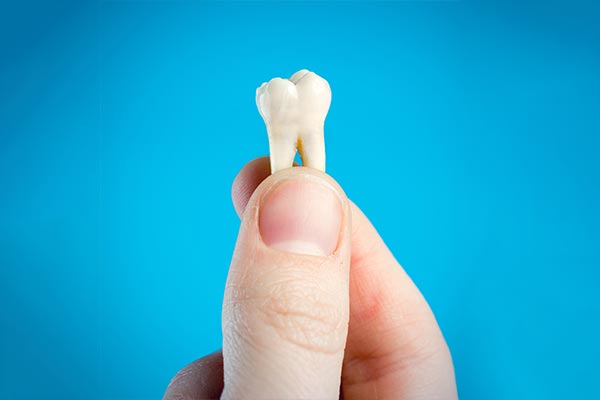
For saving the tooth to be practical, its structure must be strong enough to support the root canal. Sometimes the decay is so severe that the remaining tooth structure is too weak. If this is the case, extraction is inevitable.
It may also become necessary to pull a tooth that is severely damaged due to trauma. A blow to the mouth can crack a tooth in several different places, which can be difficult to restore. It sometimes also becomes necessary to extract a tooth when the cracks extend beneath the gum line. A general dentist may need to take X-rays to identify these cracks, as they may not be visible in the tooth's surface.
Despite the significant advances in restoration methods for missing teeth, no treatment has all the advantages of a patient's natural teeth. Saving a tooth offers a patient specific advantages.
Pulling a tooth or saving one with a root canal both are measures to prevent the patient from feeling pain or discomfort. Nevertheless, many patients report more pain with an extraction, whether during the procedure itself or its recovery, than with a root canal.
The loss of a tooth has an effect on the rest of the mouth, especially the jaw. The bone of the jaw starts to atrophy when the tooth is no longer there to strengthen it. The process of bone loss starts immediately upon the loss of the tooth but takes a while to become noticeable. Over time, it can actually change the shape of the jaw.
While extraction might seem like the simpler option, it puts a patient at risk for painful complications, such as dry socket and infection. There is no chance of a dry socket with a root canal because there is no socket and no scab. Saving the tooth also means fewer follow-up appointments to check for infection and discuss replacement options.
Artificial dental restoration options are still not as strong as natural teeth. When some teeth are missing, it can affect the bite alignment because the others shift to close the gap. Natural teeth are also easier to keep clean.
Check out what others are saying about our dental services on Yelp:
General Dentist in Denver, CO
Natural teeth offer the patient advantages that even the most sophisticated restoration methods cannot fully replicate. A general dentist generally prefers to save a damaged tooth, but it is not always possible. Sometimes the damage is beyond repair and extraction becomes the only option.
Request an appointment or call Integrity Family Dental at 303-337-3000 for an appointment in our Denver office.
An implant dentist often provides crucial support when a dental implant sustains damage that could…
Proper care is essential to maintain oral health, whether a tooth is treated with a…
A healthy and complete smile contributes to confidence, oral function, and overall well-being. When missing…
With routine checkups and professional polishing, a dental crown can stay smooth, comfortable, and bright…
An implant dentist provides a reliable and long-lasting solution for missing teeth through dental implants.…
Finding the right implant dentist is the first step for those considering dental implants to…